Canon EOS Rebel T7i / Canon 800D Review 2026
Canon EOS Rebel T7i / Canon 800D Review 2026
The Canon EOS Rebel T7i, known as the Canon 800D outside the United States, was one of Canon’s most popular beginner DSLR cameras. Designed for new photographers who wanted better image quality than a smartphone, it offered excellent autofocus, strong image quality, and easy-to-use controls.
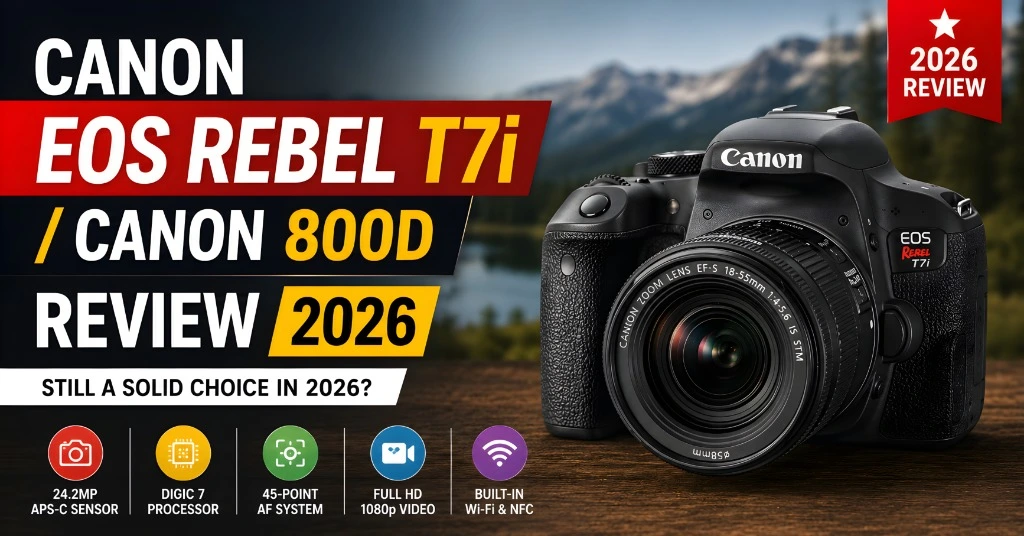
Even though newer mirrorless cameras now dominate the market, many photographers still wonder whether the Canon Rebel T7i remains a good choice today. The Canon EOS Rebel T7i (Canon 800D) is an excellent beginner DSLR that delivers strong image quality, reliable autofocus, and user-friendly controls. However, with newer Canon cameras and competitive alternatives, it may not always be the best value, especially at higher prices.
Canon EOS Rebel T7i Key Specifications
The Canon Rebel T7i offers impressive specifications for an entry-level DSLR.
Key features include:
These specifications made it one of the most advanced beginner DSLRs when it was released.
Design and Build Quality
Canon designed the T7i to be approachable for first-time DSLR users. The camera feels comfortable in the hand, with a deep grip and intuitive button layout. It is lightweight enough for travel while still feeling solid and well-built.
The fully articulating touchscreen is one of the camera’s strongest features. It allows photographers to shoot from difficult angles and makes navigation much easier compared to older DSLR models. For beginners moving from smartphones, the touchscreen experience feels familiar and easy to learn.
Image Quality
Image quality remains one of the biggest strengths of the Canon Rebel T7i.
Its 24.2MP APS-C sensor captures:
For everyday photography, the camera performs exceptionally well.
Whether you’re photographing:
The T7i consistently produces attractive images with Canon’s well-known color science. JPEG files straight out of the camera often look excellent without requiring much editing.
Autofocus Performance
The autofocus system was one of the major upgrades that separated the T7i from older beginner DSLRs.
Canon included:
In practical use, autofocus feels quick and accurate.
Photographers can confidently shoot:
The Dual Pixel autofocus system is particularly impressive when using Live View mode, providing smooth and responsive focusing that many competing DSLRs struggled to match at the time.
Continuous Shooting Speed
The Canon T7i can shoot at up to 6 frames per second. While this may not sound impressive compared to modern mirrorless cameras capable of 20fps or more, it remains perfectly adequate for most users.
For:
6fps provides enough speed to capture important moments without difficulty.
Beginner-Friendly Features
One of Canon’s goals with the Rebel series has always been to make photography easier to learn. The T7i introduced an enhanced guided interface that helps beginners understand camera settings. When adjusting exposure settings, the camera displays visual explanations showing how aperture, shutter speed, and depth of field affect an image.
For new photographers, these educational guides can make learning photography less intimidating. However, experienced users may prefer disabling the guided mode and using the traditional interface.
Connectivity Features
Canon equipped the T7i with several wireless features:

These allow users to:
Although connectivity feels more basic than that of modern cameras, it remains useful for everyday photography.
Lens Compatibility
One advantage of the Canon Rebel T7i is access to Canon’s extensive EF and EF-S lens ecosystem.
Users can choose from:
Popular lens options include:
This flexibility allows photographers to expand their system as their skills improve.
Video Capabilities
The Canon Rebel T7i records Full HD 1080p video. While it lacks modern 4K recording capabilities, video quality remains good for casual content creation. The Dual Pixel autofocus system makes video recording much smoother than many competing DSLRs from the same era.
Users can record:
without major issues.
For modern content creators focused heavily on video, newer mirrorless cameras may be a better choice, but the T7i remains capable for occasional use.
What We Liked
The 24.2MP APS-C sensor delivers sharp, colorful images with consistent quality.
The 45-point autofocus system performs exceptionally well for a beginner DSLR.
Guided menus help new photographers learn important photography concepts.
The vari-angle touchscreen improves usability and flexibility.
Access to Canon’s extensive EF and EF-S lens ecosystem is a major advantage.
Things to Consider
Strong Internal Competition
One challenge for the T7i has always been Canon’s own lineup. Models like the Canon 77D offered additional controls and features for a relatively small price increase.
Older Technology
Compared to modern mirrorless cameras, the T7i lacks:
High-speed burst shooting
4K video
Eye-detection autofocus
Electronic viewfinder advantages
DSLR Market Changes
The photography industry has largely shifted toward mirrorless systems, making future DSLR development less likely
Canon T7i vs Canon 77D
Many buyers compared the T7i directly with the Canon 77D.
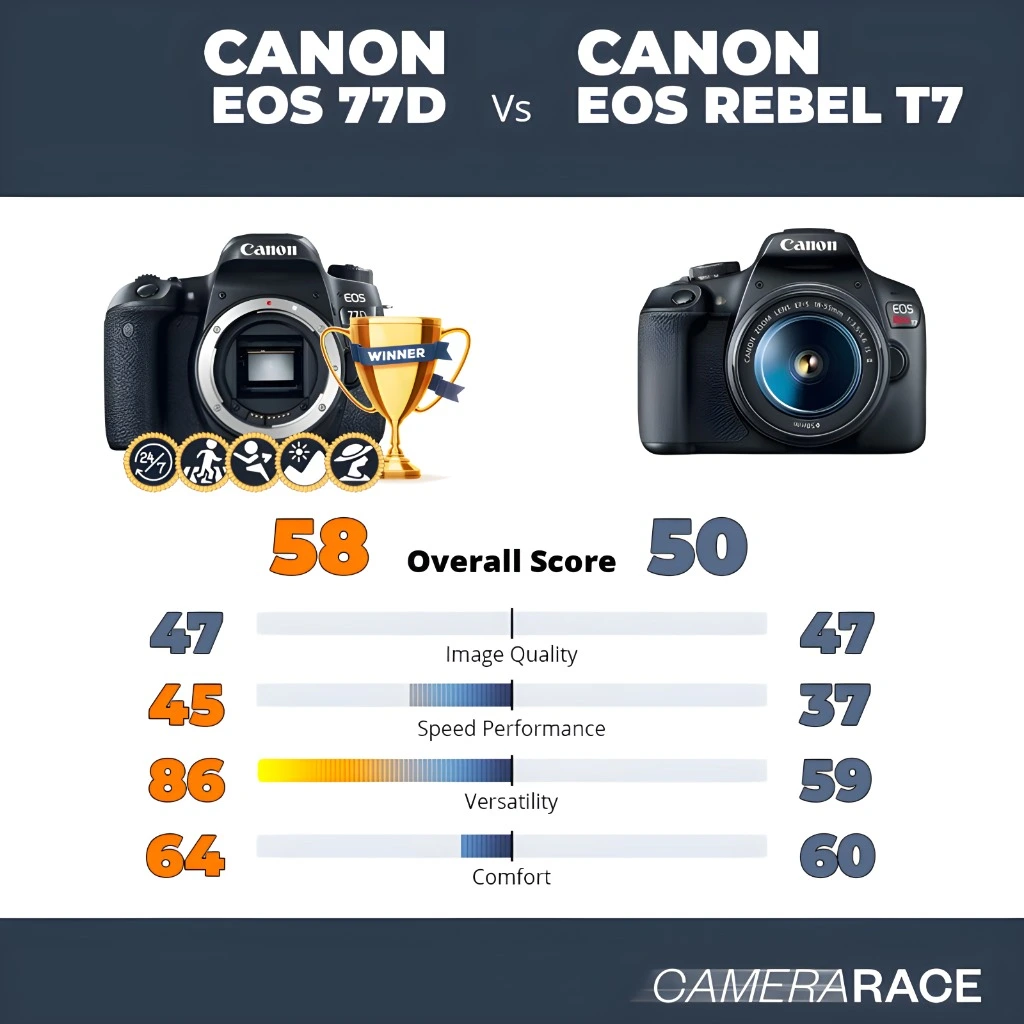
The biggest differences include:
Image quality remains virtually identical because both cameras use similar sensors and processors. For enthusiasts, the 77D often provided better long-term value.
PROS
CONS
Who Should Buy the Canon Rebel T7i?
The Canon T7i is ideal for:
It is less suitable for:
Frequently Asked Questions (FAQs)
CONCLUSION
The Canon EOS Rebel T7i remains one of the best beginner DSLRs Canon has ever produced. It offers excellent image quality, reliable autofocus, user-friendly controls, and access to a huge lens ecosystem. Even years after release, it remains capable of producing beautiful photographs.
The challenge isn’t the camera itself—it’s the competition. Newer Canon models, mirrorless alternatives, and even some older Canon cameras often offer better value depending on pricing. If you find the Canon Rebel T7i at a good price, it remains an excellent entry point into serious photography.